Embedded Files
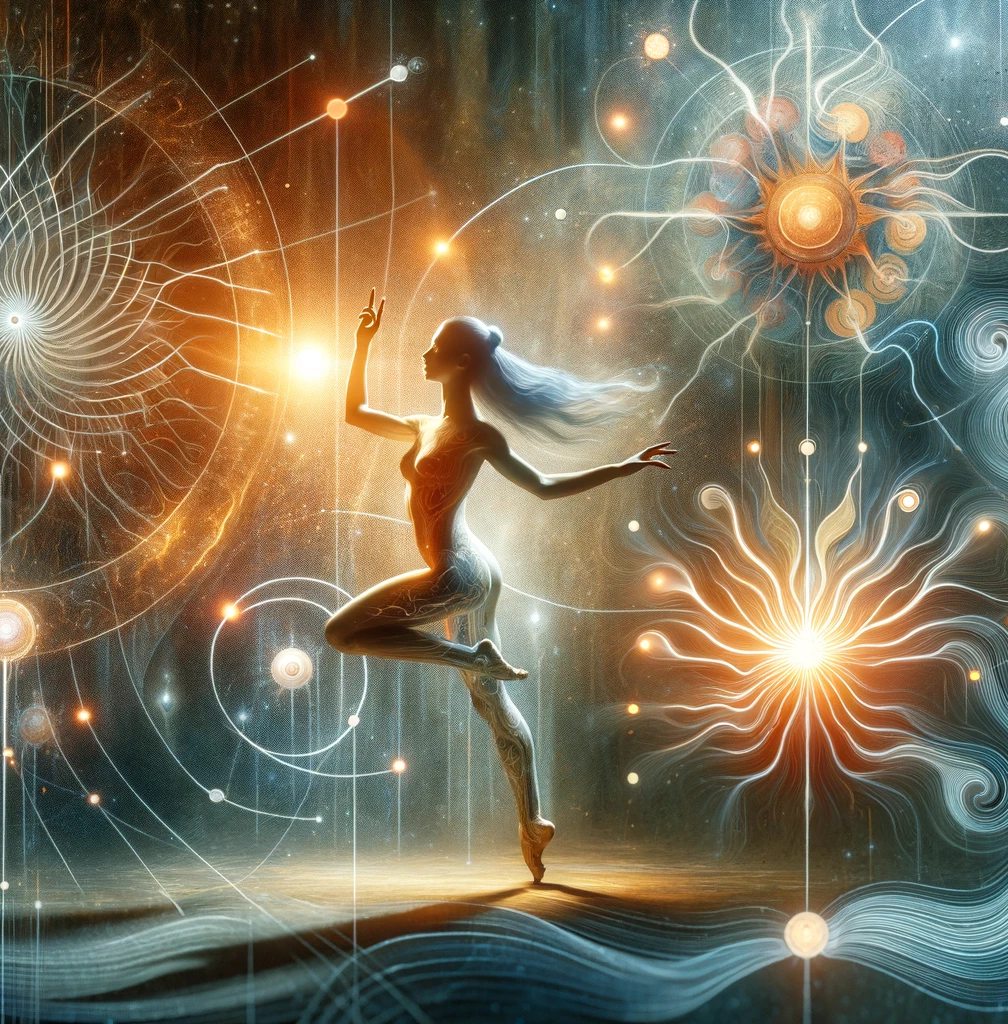
Dance and Mesmeric Polyvagal Therapy: A Theoretical Introduction
Dance and Mesmeric Polyvagal Therapy: A Theoretical Introduction
Rhythm offers an alternative to the crisis method for resolving traumas
Dance as an intervention is gaining significant recognition in physical and mental health, autism, trauma and other fields. Dr. Marco Paret has given this a specific form by integrating the principles of the Polyvagal Theory into dance work.
Dr. Paret's methods draw on several sources, including Terpsichore Trance Therapy (TTT), which uses the rhythmic and ecstatic aspects of dance to induce a trance. Rhythm is the key element, because it is thought to stimulate the ventral vagus nerve, which lies close to the skin at the solar plexus. This matters because the vagus nerve is integral to the gut-brain axis and is considered a vital mediator of the mind-body connection.
Dance movement can release the "freezing" linked to the dorsal vagus nerve, the branch that, under extreme stress, produces immobility or shutdown. By dancing, a person can thaw this frozen state, release tension and open up emotional expression. In our practice we saw bodies come out of this freeze through rhythm years before Polyvagal Theory entered the vocabulary of therapists; the theory now gives us a language for what happens.
Dr. Paret's approach is supported by several studies on the effects of dance/movement therapy (DMT). For instance, Conceição & Neto (2016) and Neto et al. (2014) found improved exercise capacity and lower blood pressure, suggesting better cardiovascular health and lower levels of stress and depression.
The research of Koch et al. (2019) and Karkou et al. (2019) supports the effectiveness of DMT in improving quality of life, mood, cognitive skills and interpersonal skills. Takahashi et al. (2019) also found improved social skills in autistic people through DMT.
The benefits of DMT extend from the individual to the wider social context. As described by Levine & Land (2016) and Tomaszweski et al. (2023), dance used in trauma work strengthens the mind-body connection and helps people identify and express their emotions, which are foundations of healing.
On equity and justice in DMT, researchers such as Jorden (2022), Cantrick et al. (2018) and Kawano & Chang (2019) stress the need to recognize cultural biases and address the specific needs of marginalized groups. This ensures that DMT is accessible and relevant to diverse populations, as Nichols (2019) and Whyte & Barclay (2019) also underline.
Studies on DMT in schizophrenia by Biondo et al. (2021) and Bryl et al. (2020) show positive results in symptom management, social connection and self-awareness. These findings agree with the embodied aesthetics framework (Koch, 2017) and embodied neurobiology (Homann, 2010, 2020), which suggest that DMT can contribute significantly to the overall well-being of the person, particularly in mental health difficulties.
Dr. Paret's work, rooted in the Polyvagal Theory, shows how rhythm, movement and intention in dance can activate the vagus nerve, supporting healing and emotional regulation. This approach contributes to psychotherapy and renews the ancient human tradition of healing through dance.
Dance and Non-Verbal Hypnosis
Dance and Non-Verbal Hypnosis
In this video, a young woman releases tensions through non-verbal hypnotic dance and specific movements.
Learn the method
Mesmeric Polyvagal Therapy is taught in the courses of Dr. Paret's School (ISI-CNV – Université Européenne): live seminars and online lessons, from the first-level Master to advanced training, with specific expertise in polyvagal hypnosis, trembling, completion of the response and ventral vagal stimulation. Request the programme and the next dates: our first contact is always a WhatsApp message, never a call.
→ Request information on the courses
→ Videos and international activity of Dr. Paret
→ marcoparet.com: the School of Dr. Paret
This site is available in: English · Italiano · Français · Русский · 中文
Research notes
A selection of peer-reviewed studies on polyvagal theory and vagal function that offer a scientific reading of the topics discussed in this article.
Koch SC, Riege RFF, et al. (2019). Effects of dance movement therapy and dance on health-related psychological outcomes: a meta-analysis update. Frontiers in Psychology, 10, 1806. Synthesising 41 controlled studies, this meta-analysis found medium overall effects of dance movement therapy and dance, with reductions in depression and anxiety, while noting high heterogeneity and methodological limitations. https://doi.org/10.3389/fpsyg.2019.01806
Lucas AR, Klepin HD, et al. (2016). Mindfulness-based movement: a polyvagal perspective. Integrative Cancer Therapies, 17(1), 5-15. A conceptual review that uses polyvagal theory as a framework for understanding attentive, mindful movement as a possible support for regulation; it is relevant to movement-based approaches, although it does not test dance directly. https://doi.org/10.1177/1534735416682087
Payne P, Levine PA, Crane-Godreau MA (2015). Somatic experiencing: using interoception and proprioception as core elements of trauma therapy. Frontiers in Psychology, 6, 93. This theoretical paper describes Somatic Experiencing, which guides attention to bodily sensation to complete thwarted defensive responses and discharge excess autonomic arousal; it offers a neurophysiological account of discharge and release, not an outcome trial. https://doi.org/10.3389/fpsyg.2015.00093
Zhao R, An M, et al. (2025). Effects of a Tai Chi dance intervention on the autonomic nervous system in university students. Medicine, 104(42), e44930. In a randomised study of 42 students, 16 weeks of Tai Chi dance was associated with differences in resting HRV indices compared with controls; the sample is small and the result needs replication. https://doi.org/10.1097/MD.0000000000044930
Page updated
Google Sites
Report abuse
This site uses cookies from Google to deliver its services and to analyze traffic. Information about your use of this site is shared with Google. By using this site, you agree to its use of cookies.
Learn more
Got it