Embedded Files
The Role of Touch
The Role of Touch
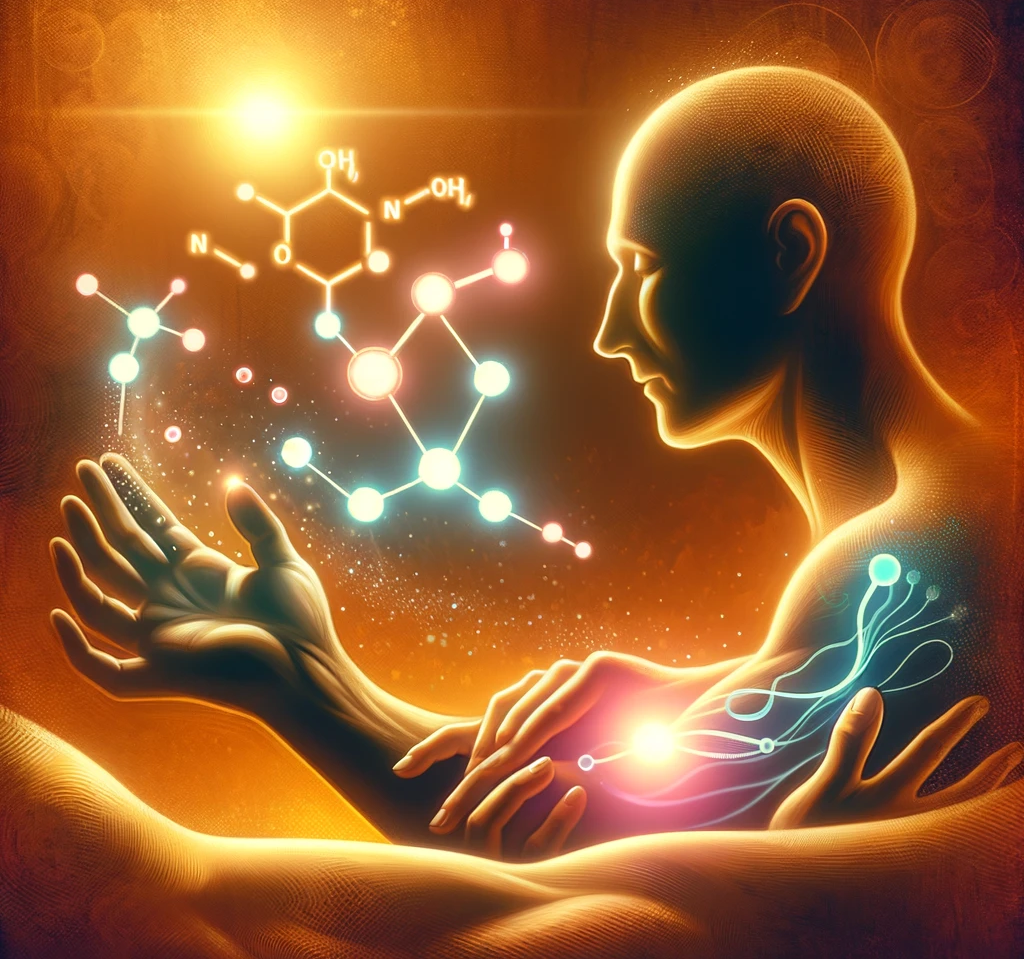
Tactile stimulation is one key to understanding non-verbal hypnosis. One of our techniques is the magnetic pass: the practitioner's hand moves very close to the body without touching it. The skin and the autonomic nervous system still register the nearness, warmth and slight air movement of the hand, and the person's breathing and muscle tone change in response.
In polyvagal terms, touch can stimulate the ventral vagus, the branch of the vagus nerve that calms the heart and supports safety and social connection. In our practice we relied on the calming effect of touch and magnetic passes long before "ventral vagus" became a familiar term; the theory now indicates which circuit they engage.
A study of hospitalised cardiovascular patients (Weiss, 1990) applied a standardised touch protocol: structured periods of different tactile stimuli, delivered as physical assessment procedures and massage. Heart rate and blood pressure were monitored throughout the 16-minute protocol, and both decreased as a result of touch. (Source: *The Handbook of Touch: Neuroscience, Behavioral, and Health Perspectives*, Springer Publishing Company, Kindle locations 4613-4615.)
The ventral vagus also governs connection, and touch is a universal sign of deep connection between people: from newborns to the elderly, it comforts and expresses affection. It is the basis of human closeness, producing the sensations of comfort and warmth that relationships need in order to grow (Andersen, 2008; Andersen & Guerrero, 1998; Floyd, 2006; Montagu, 1978).
Touch is a core element of human intimacy (Andersen, 2008; Andersen, Guerrero, & Jones, 2006; Prager, 1995). It is central to nonverbal immediacy, the set of signals that communicate closeness and availability without words (Andersen, 1985, 2008; Andersen, Hecht, Hoobler, & Smallwood, 2002; Andersen & Wang, 2006), and to the concept of interpersonal affection (Floyd, 1997, 2000, 2006).
Even in cultures where people touch less, touch remains the common way of expressing intimacy within families, between partners and among close friends. This connection may have a chemical basis: studies suggest that touch triggers the release of oxytocin (Floyd, 2006; Floyd, Mikkleson, & Hesse, 2007; Morhenn, Park, Piper, & Zak, 2008), a hormone associated with warmth and bonding in close relationships. Meaney and colleagues (Francis, Champagne, & Meaney, 2000) linked maternal care behaviours in animals, such as licking and grooming, to differences in the offspring's brain oxytocin levels. More recent research finds a similar pattern in humans. Mothers who used affectionate touch for more than two-thirds of a play interaction with their infant showed a rise in oxytocin afterwards; mothers who used it rarely did not. Among fathers, oxytocin rose in those who engaged in lively, stimulating contact, in line with observations of fathers actively involved in caregiving (Feldman, Gordon, et al., 2010). Research therefore suggests that the typical ways parents touch, more tender in mothers and more playful in fathers, shape both baseline oxytocin levels and its increase after time with their children.
Non-Verbal Hypnosis with Magnetic Passes
Non-Verbal Hypnosis with Magnetic Passes
Learn the method
Mesmeric Polyvagal Therapy is taught in the courses of Dr. Paret's School (ISI-CNV – Université Européenne): live seminars and online lessons, from the first-level Master to advanced training, with specific expertise in polyvagal hypnosis, trembling, completion of the response and ventral vagal stimulation. Request the programme and the next dates: our first contact is always a WhatsApp message, never a call.
→ Request information on the courses
→ Videos and international activity of Dr. Paret
→ marcoparet.com: the School of Dr. Paret
This site is available in: English · Italiano · Français · Русский · 中文
Research notes
A selection of peer-reviewed studies on polyvagal theory and vagal function that offer a scientific reading of the topics discussed in this article.
Diego MA, Field T (2009). Moderate pressure massage elicits a parasympathetic nervous system response. International Journal of Neuroscience, 119(5), 630-638. In 20 healthy adults, moderate-pressure massage increased high-frequency HRV and lowered the LF/HF ratio, whereas light-pressure massage produced the opposite pattern; this suggests that the quality of touch matters for the autonomic response. https://doi.org/10.1080/00207450802329605
Diego MA, Field T, et al. (2007). Preterm infant massage elicits consistent increases in vagal activity and gastric motility that are associated with greater weight gain. Acta Paediatrica, 96(11), 1588-1591. In a randomised study of 80 preterm infants, moderate-pressure massage produced short-term increases in vagal activity and gastric motility that were associated with weight gain. https://doi.org/10.1111/j.1651-2227.2007.00476.x
Field T, Diego M, Hernandez-Reif M (2011). Potential underlying mechanisms for greater weight gain in massaged preterm infants. Infant Behavior and Development, 34(3), 383-389. Path analyses suggested that the increase in vagal activity during massage was related to gastric motility and insulin release, pointing to vagal branches as a possible pathway between touch and physiological change. https://doi.org/10.1016/j.infbeh.2010.12.001
Field T (2016). Massage therapy research review. Complementary Therapies in Clinical Practice, 24, 19-31. A broad review reporting beneficial effects of massage across many conditions and suggesting that stimulation of pressure receptors may enhance vagal activity and lower cortisol; the author notes that many studies rely on self-report and that more rigorous research is needed. https://doi.org/10.1016/j.ctcp.2016.04.005
Page updated
Google Sites
Report abuse
This site uses cookies from Google to deliver its services and to analyze traffic. Information about your use of this site is shared with Google. By using this site, you agree to its use of cookies.
Learn more
Got it