Embedded Files
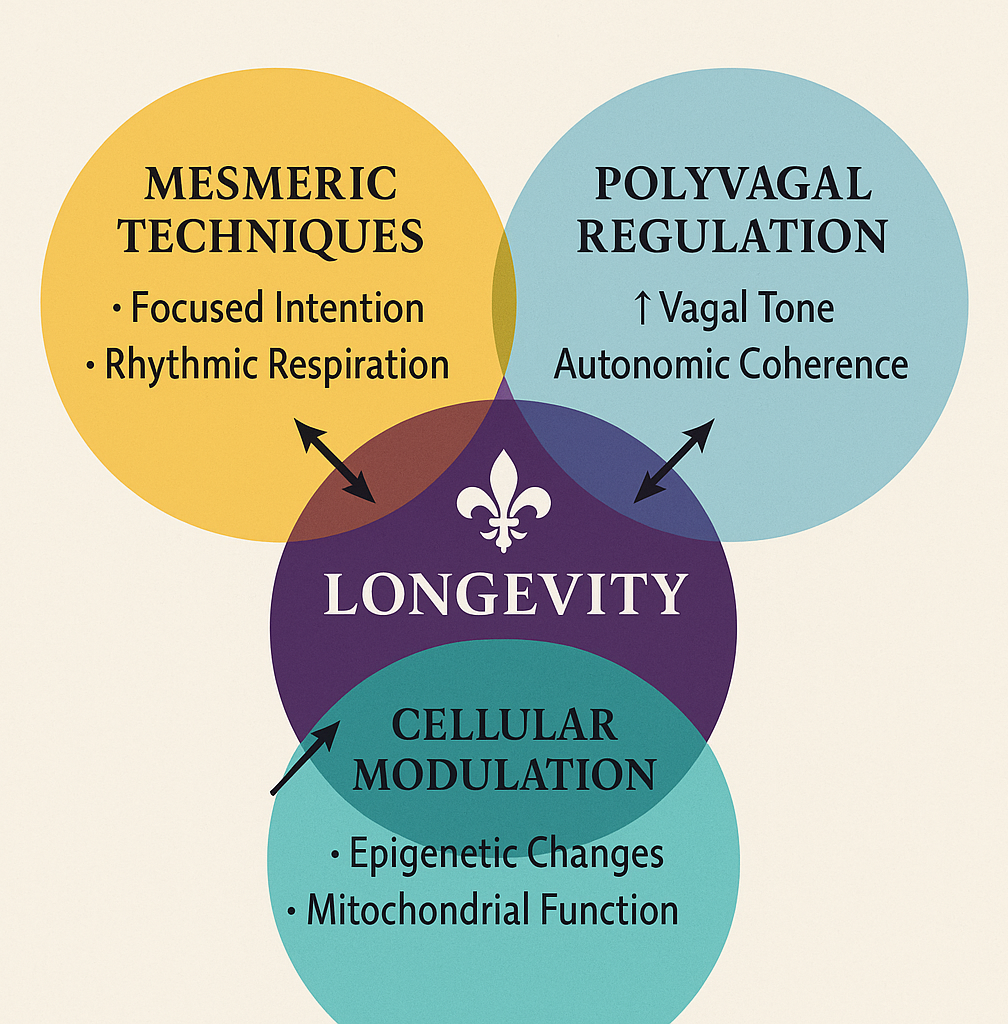
Magnetic and Epigenetic Therapy: A Non-Verbal Pathway to Cellular Regulation and Longevity
Magnetic and Epigenetic Therapy: A Non-Verbal Pathway to Cellular Regulation and Longevity
Dr. Marco Paret, Université Populaire Balkan, Anneville Institute for Neuro-Somatic Research
Dr. Marco Paret, Université Populaire Balkan, Anneville Institute for Neuro-Somatic Research
Abstract
Abstract
Recent research in psychoneuroendocrinology (the study of how mind, nerves and hormones interact) and in epigenetics (the regulation of which genes are switched on or off) suggests that environmental and relational states can regulate gene expression, cellular metabolism and resilience. Magnetic and Epigenetic Therapy (MET) is proposed as a non-verbal, somato-energetic approach that integrates Mesmeric techniques, Polyvagal regulation and cellular epigenetic modulation. MET hypothesizes that coherent magnetic fields, generated through focused intention, rhythmic breathing and interpersonal entrainment (the tendency of two rhythms to synchronize), may influence the bioelectromagnetic and biochemical environment of the organism, supporting homeostatic recovery and epigenetic rejuvenation. The approach connects the historical Mesmeric tradition with modern biophysics and epigenetics, and offers a new model of longevity based on neuro-somatic coherence.
1. Introduction
1. Introduction
The discovery that emotional and autonomic states can shape gene expression has changed how we understand the interaction between mind and body. Epigenetic modifications, such as DNA methylation, histone acetylation and regulation by non-coding RNA, are chemical marks that act as an interface between environmental stimuli and the genome: they determine which genes are expressed and which are silenced. In parallel, research in bioelectromagnetism and social neurophysiology indicates that coherence fields, patterns of synchronized physiological oscillations between two or more people, can modulate autonomic tone and cellular communication.
Historically, Franz Anton Mesmer and later Baron du Potet, pioneers of animal magnetism, described similar principles: a subtle vital force circulates within living beings and can be harmonized through non-verbal gestures, magnetic passes and focused attention. In our practice we observed the effects of this work, the calm, the warmth, the shifts in breathing and posture, long before they could be described in autonomic terms. Today Polyvagal Theory (Porges, 2011) provides a scientific reading of these phenomena: the autonomic nervous system can enter states of safety or of defense, and these states modulate endocrine, immune and mitochondrial function.
Magnetic and Epigenetic Therapy aims to bring these two domains together, Mesmeric coherence and epigenetic plasticity, in a single framework for the non-pharmacological regulation of cellular aging.
2. Theoretical Framework
2. Theoretical Framework
2.1 The Bio-Energetic Field and Magnetic Coherence
2.1 The Bio-Energetic Field and Magnetic Coherence
In Mesmeric theory the body emits and receives subtle electromagnetic patterns, which modern biophysics calls low-frequency biofields. Today these fields can be measured with magnetometry of the heart and brain (magnetocardiography and magnetoencephalography). These measurements show that coherent states, in which heart and brain rhythms are synchronized, produce stable electromagnetic signatures that correlate with high vagal tone (HRV, heart rate variability) and with parasympathetic dominance, the resting and recovery mode of the nervous system.
When two people interact in a state of focused empathy or rhythmic entrainment, their oscillatory patterns may synchronize and create a shared field. We call this process mesmeric coupling. It can be considered a bioelectromagnetic feedback loop capable of influencing stress hormones, inflammatory pathways and, potentially, epigenetic regulators such as SIRT1, PGC-1α and NF-κB (proteins involved respectively in longevity, mitochondrial energy production and inflammation).
2.2 Epigenetic Modulation through Neuro-Somatic States
2.2 Epigenetic Modulation through Neuro-Somatic States
The epigenome responds to psychosocial and environmental cues. Studies have shown that meditation, yoga, Tai Chi and breath regulation can induce rapid changes in the DNA methylation of genes related to inflammation and oxidative stress (Kaliman et al., 2014; Chaix et al., 2017). Polyvagal engagement, marked by slow breathing, a melodic voice and a sense of relational safety, activates the cholinergic anti-inflammatory pathway, a reflex by which the vagus nerve dampens inflammation. This reduces the systemic stress signals that would otherwise produce unfavourable epigenetic marks.
A state of coherent safety therefore works as a biological switch that maintains or restores youthful patterns of gene expression. In this sense, the magnetic rapport of classical mesmerism can be read as a state-dependent epigenetic environment that supports cellular repair.
3. Mechanisms of Action (Proposed Model)
3. Mechanisms of Action (Proposed Model)
Level
Physiological mechanism
Epigenetic correlate
Mesmeric analogue
Neural
Polyvagal regulation → ↑ vagal tone, ↓ amygdala activation
Reduced methylation of stress-response genes (e.g. FKBP5, NR3C1)
Calm gaze, magnetic rapport
Endocrine
↓ Cortisol, ↑ DHEA, melatonin
Activation of longevity-related sirtuins (SIRT1, SIRT3)
Fluid passes balancing polarities
Mitochondrial
↑ CoQ10, NAD⁺ turnover, redox homeostasis
Improved PGC-1α signaling, antioxidant gene expression
Transmission of vital energy
Cellular
Microcurrents and electromagnetic entrainment
Modulation of DNA methylation, histone acetylation
Repolarization of the vital field
In MET sessions, rhythmic magnetic passes and synchronized breathing create a low-frequency oscillatory environment (around 0.1 Hz, roughly one cycle every ten seconds), which matches the resonance of heart–brain HRV coherence. This frequency range corresponds to maximal nitric oxide release, relaxation of the blood vessel walls and efficient oxygen use by the mitochondria: physiological correlates of rejuvenation.
4. Experimental Perspectives
4. Experimental Perspectives
Preliminary pilot studies now in progress (Paret et al., 2025) monitor HRV, cortisol and DNA methylation markers before and after non-verbal sessions that combine magnetic passes and coherent breathing. Expected outcomes include:
Increased HRV and parasympathetic dominance
Reduced methylation of inflammatory genes (IL-6, TNF-α promoters)
Upregulation of SIRT1 and of mitochondrial biogenesis pathways
If confirmed, these findings would establish the magnetic field of human interaction as an epigenetic environment: a medium capable of influencing the cellular clock of aging.
5. Discussion: From Alchemy to Biology
5. Discussion: From Alchemy to Biology
In alchemical symbolism, the transmutation of base metals into gold represented the refinement of the vital essence (Jing in the Taoist tradition, Mercurius in the Western one). MET follows a comparable process: it transforms incoherent stress patterns (entropy, disorder) into coherent vibrational order (negentropy). The magnetic passes act as psychobiological rituals that guide the body through the classical alchemical phases, nigredo (purification), albedo (regeneration) and rubedo (illumination), which correspond respectively to stress release, autonomic balance and epigenetic renewal.
This framework gives substance to the intuition of Saint-Germain and Mesmer, early explorers of what we now describe as bioelectromagnetic and epigenetic self-regulation.
6. Conclusion
6. Conclusion
Magnetic and Epigenetic Therapy (MET) proposes a synthesis between what can be measured and what cannot be put into words:
scientifically, it acts on the neuro-epigenetic axis through vagal–mitochondrial coherence;
energetically, it renews the alchemical art of presence, in which consciousness reorganizes biology.
By joining the Mesmeric tradition with modern molecular biology, MET offers a contemporary “Western Neidan” (Neidan is the Taoist practice of inner alchemy): a disciplined practice of inner transmutation that may sustain longevity, understood not as myth but as physiology refined by awareness.
References (selected)
References (selected)
Kaliman, P. et al. (2014). Rapid changes in histone deacetylases and inflammatory gene expression after a mindfulness retreat. Psychoneuroendocrinology, 40, 96-107.
Chaix, R. et al. (2017). Epigenetic clock analysis of meditators. Psychoneuroendocrinology, 85, 210-214.
Porges, S.W. (2011). The Polyvagal Theory. Norton.
Sinha, S. et al. (2020). Epigenetic effects of electromagnetic fields on cellular stress pathways. Frontiers in Neuroscience, 14, 894.
McCraty, R. (2022). Heart-brain coherence and biofield physiology. Global Advances in Health and Medicine, 11, 1-10.
Learn the method
Mesmeric Polyvagal Therapy is taught in the courses of Dr. Paret's School (ISI-CNV – Université Européenne): live seminars and online lessons, from the first-level Master to advanced training, with specific expertise in polyvagal hypnosis, trembling, completion of the response and ventral vagal stimulation. Request the programme and the next dates: our first contact is always a WhatsApp message, never a call.
→ Request information on the courses
→ Videos and international activity of Dr. Paret
→ marcoparet.com: the School of Dr. Paret
This site is available in: English · Italiano · Français · Русский · 中文
Research notes
A selection of peer-reviewed studies on polyvagal theory and vagal function that offer a scientific reading of the topics discussed in this article.
Bhasin MK, Dusek JA, et al. (2013). Relaxation response induces temporal transcriptome changes in energy metabolism, insulin secretion and inflammatory pathways. PLoS One, 8(5), e62817. A single session of relaxation-response practice was followed by changes in blood gene expression, with increased expression of genes for energy metabolism and mitochondrial function and reduced expression of NF-kB-related inflammatory genes, more marked in long-term practitioners. https://doi.org/10.1371/journal.pone.0062817
Kaliman P, Alvarez-López MJ, et al. (2013). Rapid changes in histone deacetylases and inflammatory gene expression in expert meditators. Psychoneuroendocrinology, 40, 96-107. After one day of intensive mindfulness practice, experienced meditators showed lower expression of histone deacetylase genes and of pro-inflammatory genes than controls, and some of these changes were associated with faster cortisol recovery from stress. https://doi.org/10.1016/j.psyneuen.2013.11.004
Cole SW (2013). Social regulation of human gene expression: mechanisms and implications for public health. American Journal of Public Health, 103(Suppl 1), S84-S92. Cole reviews the field of social genomics, showing that the social environment, including perceived threat, is associated with broad changes in immune-related gene expression through identifiable signalling pathways. https://doi.org/10.2105/AJPH.2012.301183
Picard M, McEwen BS (2018). Psychological stress and mitochondria: a conceptual framework. Psychosomatic Medicine, 80(2), 126-140. The authors propose that mitochondria sense and transduce psychosocial stress into cellular changes, including effects on gene expression, epigenetic modifications and the rate of cellular ageing, a process they call 'mitochondrial allostatic load'. https://doi.org/10.1097/PSY.0000000000000544
Page updated
Google Sites
Report abuse
This site uses cookies from Google to deliver its services and to analyze traffic. Information about your use of this site is shared with Google. By using this site, you agree to its use of cookies.
Learn more
Got it